
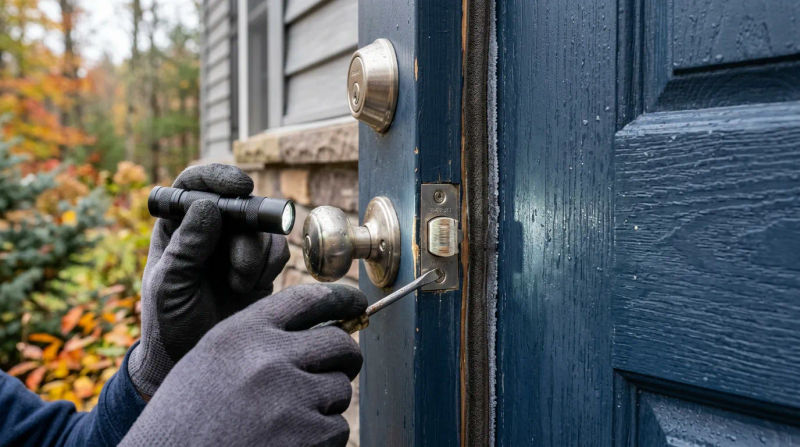
It’s a crisp October evening here in Mount Pocono. The leaves are piling up, and you can feel the first real bite of winter in the air. You get home, put your key in the front door lock, and… it resists. You have to jiggle it, push on the door just right, and give it an extra-firm turn to get the bolt to slide home. It’s a minor annoyance now, but as a locksmith with over a decade of experience, I can tell you that this little struggle is often the first warning sign of a bigger problem, especially with the colder, wetter weather settling in.
That sticky lock you’re fighting with isn't just an inconvenience; it’s a symptom. Ignoring it can lead to a key breaking off in the lock, a complete mechanism failure, or worse, being locked out of your own home on a freezing night. Before that happens, let’s diagnose what might be going on with your door.
Common Signs and Symptoms
That initial difficulty turning the key is the most common complaint I hear, but it’s part of a family of symptoms that all point toward a lock or door alignment issue. Pay close attention if you notice any of the following, as they rarely get better on their own:
- You have to push, pull, or lift the door: If you find yourself needing to apply pressure to the door to get the key to turn or the latch to click, it’s a classic sign of misalignment. The bolt or latch is no longer lining up perfectly with the strike plate in the door frame.
- The key is difficult to insert or remove: A key that feels tight or gritty going into the keyway suggests either debris inside the lock cylinder or worn-out internal pins that are no longer lifting correctly.
- The deadbolt doesn’t fully extend or retract: You might turn the key or thumbturn and see the bolt only move part of the way. This is a significant issue, as a partially extended deadbolt provides almost no security and indicates a serious obstruction or internal failure.
- The latch doesn’t “click” shut: When you close your door, you should hear a definite click as the spring-loaded latch enters the strike plate. If you’re experiencing a situation where the door latch not catching Mount Pocono homes is a frequent issue, your door isn't securely closed, even if it looks like it is.
- You hear grinding or crunching sounds: Your lock mechanism should operate smoothly and quietly. Any grinding noises are a red flag that internal components are worn, broken, or grinding against each other, which can lead to a sudden and complete failure.
- The key turns but nothing happens: This is one of the more alarming symptoms. If the key turns but door won’t lock Mount Pocono residents might find this particularly frustrating. This indicates that the connection between the lock cylinder and the bolt mechanism (the tailpiece) has broken.
What Causes This Problem
Understanding the root cause is the key to finding the right solution. It’s not always the lock itself that’s to blame. More often than not, it’s the house and the environment around it that are causing the issue.
Seasonal Wood and Frame Expansion: This is the number one reason for a front door lock sticking in fall. As the damp, cool weather arrives in the Poconos, wooden doors and frames absorb moisture from the air and swell. Even a millimeter of expansion can be enough to throw off the delicate alignment between the lock’s bolt and the strike plate in the frame, causing friction and making it difficult to operate.
Foundation and House Settling: Many homes in the Mount Pocono area are from the 1970s, often featuring Bi-level or Raised Ranch designs. These properties have had nearly 50 years to settle. This natural, gradual process can cause door frames to shift out of square. What was a perfectly aligned door a decade ago may now be slightly off, putting pressure on the latch and deadbolt every time you use it.
Worn-Out Lock Mechanism: Like any mechanical device, locks have a finite lifespan. The internal pins, springs, and tumblers wear down from thousands of uses. Over time, this wear can create sloppiness in the mechanism, making it less responsive and eventually leading to failure. An older lock is more susceptible to jamming, especially when combined with alignment issues.
Debris and Improper Lubrication: Keyways are magnets for dust, pollen, and microscopic debris. This buildup can gum up the works. A common mistake I see homeowners make is spraying a petroleum-based lubricant like WD-40 into the lock. While it might provide temporary relief, these oils are sticky and attract even more dirt, creating a sludge that makes the problem much worse in the long run.
Loose Hardware or Misaligned Strike Plate: Sometimes the fix is simpler. Screws on the door hinges or the lock’s faceplate can loosen over time, causing the door to sag or the lock to shift. The strike plate - the metal piece on the frame where the bolt enters - can also be slightly misaligned, causing the bolt to hit the edge instead of sliding smoothly into the opening.
When to Call a Professional
Some minor issues can be addressed with a bit of DIY spirit, but it’s crucial to know your limits to avoid making the problem worse.
You might be able to try this yourself:
- Check the screws: Take a screwdriver and ensure all the screws on your door’s hinges, the lockset, and the strike plate are tight. A loose hinge is a very common cause of door sag.
- Clean the keyway: Use a can of compressed air to blow out any dust or debris from inside the keyhole. Do not stick anything inside to scrape it out.
- Lubricate properly: If you must lubricate, use a product specifically designed for locks, like a dry graphite or Teflon-based spray. Apply it sparingly.
It’s time to call for professional help if:
- The simple fixes don’t work: If you’ve tightened the screws and cleaned the lock but the problem persists, it’s a sign the issue is more complex, likely related to alignment or internal wear.
- The key turns but the bolt is stuck: This points to a broken internal component. Attempting to force it can cause further damage, making the eventual repair more complicated and expensive.
- You suspect a major alignment issue: Adjusting a door frame or strike plate requires precision. A professional locksmith has the tools and experience to diagnose the misalignment and correct it without damaging your door or frame. This is where expert Mount Pocono door lock repair becomes essential.
- A key has broken off in the lock: This requires specialized extraction tools. Trying to remove it yourself with pliers or tweezers can push the broken piece further in, complicating the extraction.
Conclusion
A sticking lock is more than a daily frustration; it's your home’s way of telling you that its primary point of security is compromised. The seasonal shifts we experience here in Mount Pocono are often the trigger that reveals underlying issues like house settling and normal wear and tear. Addressing these symptoms in the fall, before the temperatures drop below freezing, is the best way to ensure you aren’t left dealing with a lockout during a snowstorm.
My team and I have seen firsthand how a small problem can escalate quickly. Don't wait for a complete failure. A quick inspection and adjustment now can save you a significant amount of stress and money later. Pay attention to the signs, and don't hesitate to get an expert opinion.
If you notice any of these signs, contact a local locksmith for an inspection.