
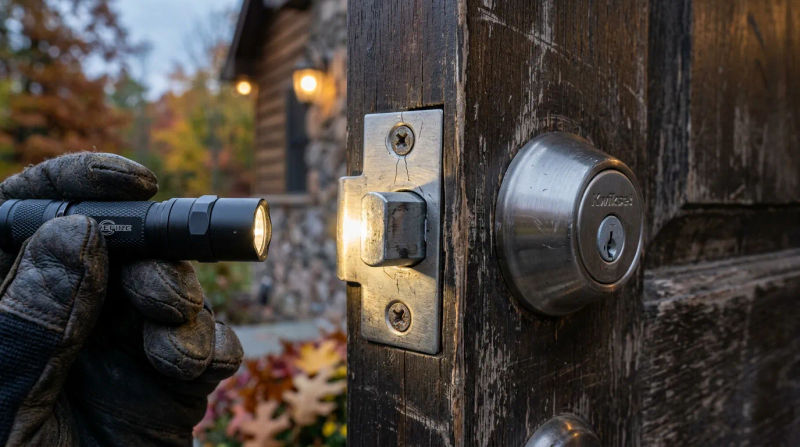
It’s a familiar feeling as the evenings get darker and colder here in the Poconos. You come home after a long day, the air has that first crisp bite of October, and you just want to get inside. But when you put your key in the deadbolt, it fights you. It’s stiff, it grinds, and you have to jiggle the key or pull on the door just right to get it to lock. What worked perfectly all summer is suddenly a daily frustration. As a locksmith who has helped homeowners in this area for over a decade, I can tell you this is one of the most common calls my team and I get every autumn.
A stubborn deadbolt isn’t just an annoyance; it’s a potential security vulnerability. If your lock isn’t engaging properly, your home isn’t as secure as it should be. Let’s walk through the common signs that your deadbolt needs attention and what might be causing the problem.
Common Signs and Symptoms
Recognizing the early warnings can save you from a late-night lockout or a more expensive repair down the road. Here are the key indicators I tell homeowners to watch for:
- The Key is Hard to Turn in the Deadbolt: This is the most frequent complaint. If you feel like you have to force the key to turn, whether locking from the outside or using the thumbturn on the inside, something is wrong. It could be an alignment issue or a problem within the lock cylinder itself. This is a classic key hard to turn in deadbolt symptom.
- You Have to Push, Pull, or Lift the Door: Do you have a specific “trick” to get your door to lock? If you have to lean on the door with your shoulder, lift up on the handle, or pull it toward you, your door and frame are no longer aligned. The bolt isn’t lining up with the hole in the frame, known as the strike plate.
- The Bolt Doesn’t Extend or Retract Fully: When you turn the key, the deadbolt should glide out smoothly and extend to its full length (typically one inch). If it stops short, it’s likely hitting the strike plate. This is one of the most common misaligned strike plate symptoms. An improperly extended bolt provides very little security.
- The Deadbolt Won't Latch at All: This is the escalation of the previous points. The misalignment has become so severe that the bolt cannot enter the strike plate opening at all. This is a serious security issue that leaves your door unsecured and often means you’re looking for urgent help because your deadbolt won’t latch Penn Estates homeowners often find this happens abruptly after a temperature drop.
- The Thumbturn is Stiff or Loose: The problem isn’t always with the key. If the interior thumbturn feels unusually stiff, gritty, or, conversely, is wobbly and loose, it points to wear and tear inside the lock mechanism itself.
- Visible Rust, Tarnish, or Cracks: Take a close look at your lock hardware. Do you see rust forming on the bolt or around the cylinder? Are there visible cracks in the metal housing? These are signs that the lock’s integrity is compromised and it’s nearing the end of its life.
- Grinding or Clicking Noises: Your lock should operate almost silently. If you hear grinding, clicking, or snapping sounds when you turn the key, it’s a red flag that internal components like pins or springs are worn, broken, or out of place.
What Causes This Problem
Understanding the root cause is key to finding the right solution. In my experience, especially with the beautiful, large homes in Penn Estates, these issues usually stem from a few common culprits.
- Seasonal Shifting: This is the biggest factor in the fall. As temperatures drop and you turn on the heat for the first time, the humidity level inside your home changes. Wood door frames and doors swell and contract. This subtle movement, just a few millimeters, is all it takes to throw off the perfect alignment your lock needs to function.
- House Settling: Many of the grand, custom homes in the Penn Estates area were built in the 1990s and 2000s. Over two or three decades, a large structure will naturally settle. This gradual shifting of the foundation can pull door frames slightly out of square, leading to chronic misalignment issues. This is particularly common with the large, two-story entryways and double doors popular during that building era. Double doors are twice as likely to have alignment problems because both doors need to align with each other and the frame.
- Worn-Out Internal Mechanism: A deadbolt is a mechanical device with moving parts. Like any machine, it wears out. The average deadbolt has a lifespan of about 10-15 years, depending on quality and usage. After thousands of cycles, the internal pins, springs, and actuator can fail, requiring professional deadbolt repair or replacement.
- Debris in the Lock: Dust, dirt, pollen, and even tiny fragments from heavy leaf fall can work their way into the keyway. This buildup can prevent the key from seating properly and jam the internal pins. Sometimes, a simple cleaning is all that's needed.
- Improper Installation: Occasionally, the problem dates back to the lock's original installation. If the holes drilled in the door or frame weren't perfectly placed, the lock may have always been under a slight strain, and years of use have finally made the problem noticeable.
When to Call a Professional
Some homeowners are comfortable with DIY projects, while others prefer to leave it to an expert. Here’s how I help my clients decide.
You can try a few simple things first:
- Clean the Lock: Use a can of compressed air to blow out the keyway and the strike plate hole. This might dislodge any debris causing the issue.
- Lubricate Sparingly: If cleaning doesn't work, you can try a dry lubricant designed for locks, like a graphite or silicone-based spray. Important: Never use an oil-based lubricant like WD-40, as it attracts more dust and dirt, gumming up the lock over time.
- Check Hinge Screws: Make sure all the screws on your door’s hinges are tight. A loose hinge can cause the door to sag and lead to misalignment.
However, you should call an experienced professional if:
- The simple fixes don’t work. If cleaning and lubricating don’t solve the problem, the issue is more complex.
- You suspect a misaligned strike plate. Adjusting a strike plate seems easy, but it requires precision. If you move it too much or chisel the frame incorrectly, you can damage the door frame and weaken your security. This is a job best left to a professional with the right tools.
- The lock is old or visibly damaged. If the lock is rusty, cracked, or over a decade old, a simple adjustment won't fix the underlying wear. It’s time for a professional deadbolt repair or a full replacement to ensure your home is secure.
- The problem is inside the lock. If you hear grinding or the thumbturn is malfunctioning, the lock's internal mechanism needs service. Disassembling a modern deadbolt is complex and best handled by someone who does it every day.
Conclusion
That stubborn deadbolt you’re wrestling with each evening is more than just a seasonal annoyance - it's a sign that your home's primary line of defense may be compromised. Whether it's the key hard to turn in deadbolt or the need to shove the door shut, these are clear misaligned strike plate symptoms or signs of internal wear. The temperature shifts of a Pennsylvania autumn, combined with the natural settling of homes in communities like Penn Estates, create the perfect conditions for these problems to surface.
Don't wait for a small frustration to become an emergency lockout or a security failure. Addressing the issue early is almost always simpler and less expensive.
If you notice any of these signs, contact a local Locksmith professional for an inspection. A quick adjustment or a straightforward repair can restore both your peace of mind and the smooth, reliable function of your lock.