

It’s a classic October scene here in Archbald: the sun sets earlier, a crisp chill is in the air, and leaves are blanketing the sidewalks. You come home after a long day, stick your key in the front door lock, and... nothing. It won’t budge. Or maybe it turns part-way and then stops, leaving you jiggling and wrestling with it in the growing darkness. As a locksmith with over a decade of experience, my team and I see this scenario play out every year as our first hard frosts arrive. That lock that was just a little “sticky” in September can quickly become a completely frozen-shut problem. Understanding the early warning signs can be the difference between a quick fix and being locked out in the cold.
Common Signs and Symptoms
A frozen door lock doesn't always happen suddenly. It usually gives you hints that trouble is brewing. As temperatures begin to dip overnight, pay close attention to how your lock feels and sounds. Ignoring these early door lock freezing symptoms can lead to a frustrating lockout. Here’s what my team and I tell homeowners to watch for:
- A Gritty or Scratchy Feeling: When you insert your key, does it feel like you’re pushing it through sand? This is often the first sign that dirt, dust, or even tiny metal filings from a worn key are accumulating inside the lock cylinder. When mixed with moisture, this debris creates a sludge that can easily freeze.
- Increased Resistance: You find yourself needing to use a little more force than usual to turn the key. It’s not stuck, but it’s definitely not smooth. This resistance is caused by moisture starting to freeze around the internal pins, making them sluggish.
- The Jiggle Becomes Necessary: What used to be a smooth turn now requires you to jiggle the key back and forth to find the “sweet spot.” This indicates the pins are not aligning properly, a classic symptom of a lock cylinder sticking in cold weather.
- The Key Won’t Turn All the Way: Your key inserts fully but stops dead before completing the turn to unlock or lock the door. This is a major red flag that ice has formed inside, physically blocking the cylinder’s rotation.
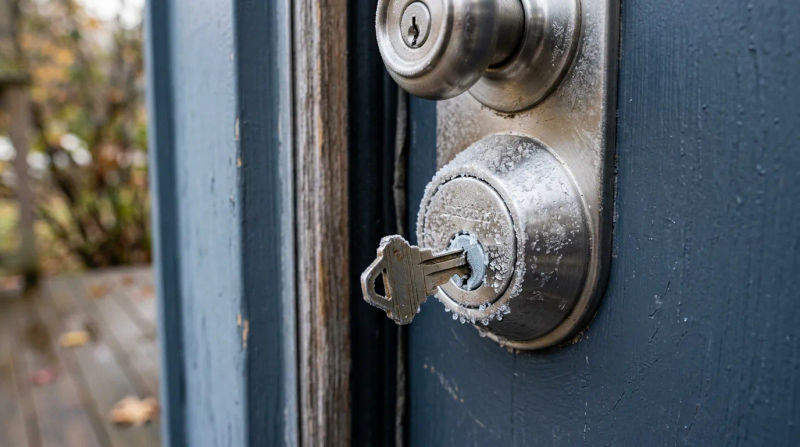
- Visible Frost or Ice: The most obvious sign is seeing a thin layer of frost or even small ice crystals around the keyway on a cold morning. If you see it on the outside, you can be sure there’s moisture on the inside, too.
What Causes This Problem
Understanding why your lock is freezing is the key to preventing it. It’s rarely just about the cold; it’s about what the cold does to other elements that have found their way into your lock’s delicate mechanism.
First and foremost, the primary culprit is moisture. Rain, humidity, condensation, and melting snow can all introduce water into the keyway. When the temperature drops below 32°F, that water expands as it turns to ice, exerting immense pressure on the pins, springs, and cylinder. This is what physically jams the lock and prevents your key from working.
Second, consider the age and condition of your hardware. Here in Archbald, many of our beautiful homes date back to the pre-1940s coal region era. These houses often feature robust, original mortise locks and hardware. While built to last, decades of use can lead to wear and tear. The tolerances in an older lock may become looser, creating more space for moisture and debris to enter and settle. That heavy, ornate lockset on your solid wood door is part of the home's character, but its internal components may be worn down, making it more susceptible to a frozen door lock.
Third, debris plays a significant role, especially in autumn. The heavy leaf fall we experience, combined with wind-blown dust and dirt, can easily find its way into your lock. This debris acts like a sponge, soaking up moisture and holding it inside the cylinder. When it freezes, it creates a solid, gritty mass that completely seizes the mechanism. A key won’t turn Archbald problem is often a combination of this debris and a sudden temperature drop.
Finally, improper maintenance can make things worse. Many people reach for oil-based lubricants like WD-40 when a lock feels stiff. Unfortunately, these wet lubricants can attract even more dust and grime, and they don’t displace moisture effectively. Over time, they can gum up the works and exacerbate the freezing problem.
When to Call a Professional
So, you’re standing at your door with a key that won’t turn. What should you do? There are a few safe things you can try before calling for help, but it’s crucial to know when to stop to avoid causing more damage.
Safe DIY Steps to Try First:
- Warm Your Key: Use the warmth of your hands or run the key under warm (not scalding hot) water and dry it thoroughly. A warm key can sometimes transfer just enough heat to thaw the ice inside the cylinder. Never use a lighter or open flame, as this can damage modern keys with plastic heads or internal chips, and it can also damage the lock's finish.
- Use a Lock De-Icer: An alcohol-based lock de-icer, available at most auto parts or hardware stores, is the best commercial product for this job. It’s designed to melt ice and displace moisture without leaving a sticky residue.
- A Hair Dryer: On a low heat setting, gently warm the lock from a few inches away. This can slowly thaw the internal mechanism. Be patient and avoid high heat, which could damage the door's paint or finish.
It's Time to Call an Expert If:
- Your key breaks off in the lock. This immediately turns a simple frozen lock into a much more complex extraction and repair job. Stop immediately if you feel the key starting to bend or flex under pressure.
- The DIY methods don't work. If you’ve tried warming the lock and using de-icer and it’s still stuck solid, there may be a more serious mechanical issue at play.
- The lock feels loose or damaged. If the entire cylinder wiggles or the lock feels broken even when it’s not cold, the freezing temperatures may have just exposed a pre-existing problem that needs professional repair.
- This happens repeatedly. If your lock freezes every time the temperature drops, it’s a sign that there is a persistent issue with moisture entry or worn components. A qualified professional can diagnose the root cause, service the lock, or recommend a weather-resistant replacement.
An experienced locksmith can safely thaw and service your lock, clean out the debris, and lubricate it with a professional-grade graphite or silicone lubricant that won’t freeze or attract dirt. For the historic homes in our area, a professional can also service or repair vintage hardware without compromising the door's integrity.
Conclusion
That first October frost in Archbald is a reminder that winter is on its way, and our homes need to be ready. A stiff or sticking lock is more than a minor annoyance; it’s a warning sign. By recognizing the symptoms - the gritty feel, the need to jiggle the key, the growing resistance - you can take action before you’re left out in the cold. The cause is almost always a combination of moisture, debris, and wear, especially in older locksets.
While a simple de-icer can sometimes solve the problem, don’t hesitate to seek expert help if the issue persists or if you fear breaking your key. Addressing a lock cylinder sticking in cold weather early is far easier and less stressful than dealing with a complete lockout on a frigid night.
If you notice any of these signs, contact a local Locksmith professional for an inspection.